

Covalent-binding Microplates
PolyAn´s covalent binding microplates are beneficial for immobilizing biomolecules that inefficiently coat by passive adsorption. The reactive surfaces can be used for covalent binding of proteins, antibodies, peptides, glycans, oligonucleotides, aptamers, or small molecules.
PolyAn offers covalent binding 96-well microplates with various plate designs for immunoassays (e.g. ELISA, FIA, LIA) and microarray printing.
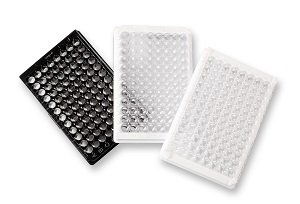
Products
3D-NHS 96-well transparent, 12 x 8-strip, flat bottom
Product-Id: 006 90 451
activated Carboxy group for direct binding of Amine-containing (bio)molecules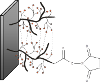
3D-NHS 96-well plate ELISA, C-bottom, transparent, 12 x 8 strip, 100 µL functionalisation volume
Product-Id: 006 95 451
activated Carboxy group for direct binding of Amine-containing (bio)molecules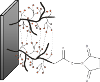
Key features
- Reactive surfaces for covalent immobilization ensure minimal leaching
- Withstands rigorous washing
- Minimal unspecific binding due to 3D functional matrix
- Control of orientation of the probe due to directed binding
- Available for colorimetric, chemiluminescence, or fluorescent detection
PolyAn also offers Biotin-binding Microplates functionalized with Streptavidin and Neutravidin, as well as Click chemistry Microplates with highly reactive Azide, DBCO, or MTZ groups.
Additionally, PolyAn offers functionalized PCR Microplates and Tubes, Solvent-stable Microplates, and Glass-bottom Microplates with a wide range of surfaces and well designs.
Customized plate surfaces
Please do not hesitate to contact us, if you require a special surface for binding of your biomolecules that is not listed in the products table. Other plate formats and substrates can be equipped with our surfaces as part of our Molecular Surface Engineering Services. We are also happy to support you in developing suitable protocols for coating on our plates.
Selected Publications
3D-Epoxy Microplates
- Tuncay, A. et al., `Performance benchmarking microplate-immunoassays for quantifying target-specific cysteine oxidation reveals their potential for understanding redox-regulation and oxidative stress´, Free Rad. Biol. Med., 2023, 204, 252. DOI: 10.1016/j.freeradbiomed.2023.05.006.
- Tuncay, A. et al., `RedoxiFluor: A microplate technique to quantify target-specific protein thiol redox state in relative percentage and molar terms´, Free Rad. Biol. Med., 2022, 181, 118. DOI: 10.1016/j.freeradbiomed.2022.01.023.
- Noble, A. et al., `ALISA: A microplate assay to measure protein thiol redox state´, Free Rad. Biol. Med., 2021, 174, 272. DOI: 10.1016/j.freeradbiomed.2021.08.018.
3D-NHS Microplates
- Vellecco, V. et al., `Phosphodiesterases S-sulfhydration contributes to human skeletal muscle function´, Pharmacol Research, 2022, 177, 106108. DOI: 10.1016/j.phrs.2022.106108.
- Santur, K. et al., `Ligand-Induced Stabilization of the Native Human Superoxide Dismutase 1´, ACS Chem Neurosci, 2021, 12, 2520. DOI: 10.1021/acschemneuro.1c00253.
- Zivanovic, J. et al., `Selective Persulfide Detection Reveals Evolutionarily Conserved Antiaging Effects of S-Sulfhydration´, Cell Metabolism, 2019, 30, 1152. DOI: 10.1016/j.cmet.2019.10.007.
- Veugelen, S. et al., `Screening and Characterization Strategies for Nanobodies Targeting Membrane Proteins´, Methods in Enzymology, 2017, 584, 59. DOI: 10.1016/bs.mie.2016.10.029.